





Filters
2 products


Frequently Asked Questions
Find answers to common questions about EQYP Fitness Products.
What is a muscle compressor used for?
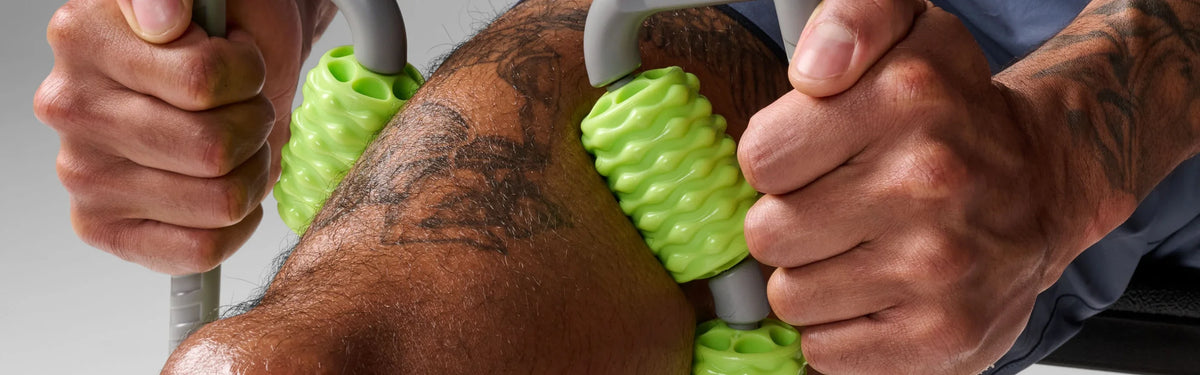
Muscle compressors use rolling components to deliver variable pressure across sore or tight muscles, commonly used on the calves, quads, and forearms to release muscle knots.
How is a muscle compressor different from a foam roller?
A muscle compressor uses multiple rolling points and a contoured, often spring-hinged design to conform to the muscle, while a foam roller relies on your body weight rolling over a fixed cylindrical surface.
How often should I use a muscle compressor?
Daily use is common, especially after intense training days, as muscle compressors are designed for regular recovery use similar to foam rolling.
What's the benefit of a spring hinge design in a muscle compressor?
A spring hinge design allows the compressor to contour and adjust to the shape of your limb, providing more consistent pressure across the muscle compared to a rigid design.
Can a muscle compressor help with calf tightness?
Yes. The calves are one of the most common areas targeted with muscle compressors, since their rolling design distributes pressure evenly along the length of the muscle.
Are muscle compressors safe for daily use?
Yes, as long as you avoid using them directly on bruised or injured tissue and use moderate, comfortable pressure rather than pressing too hard.