





Frequently Asked Questions
Find answers to common questions about EQYP Fitness Products.
What is a muscle hook used for?
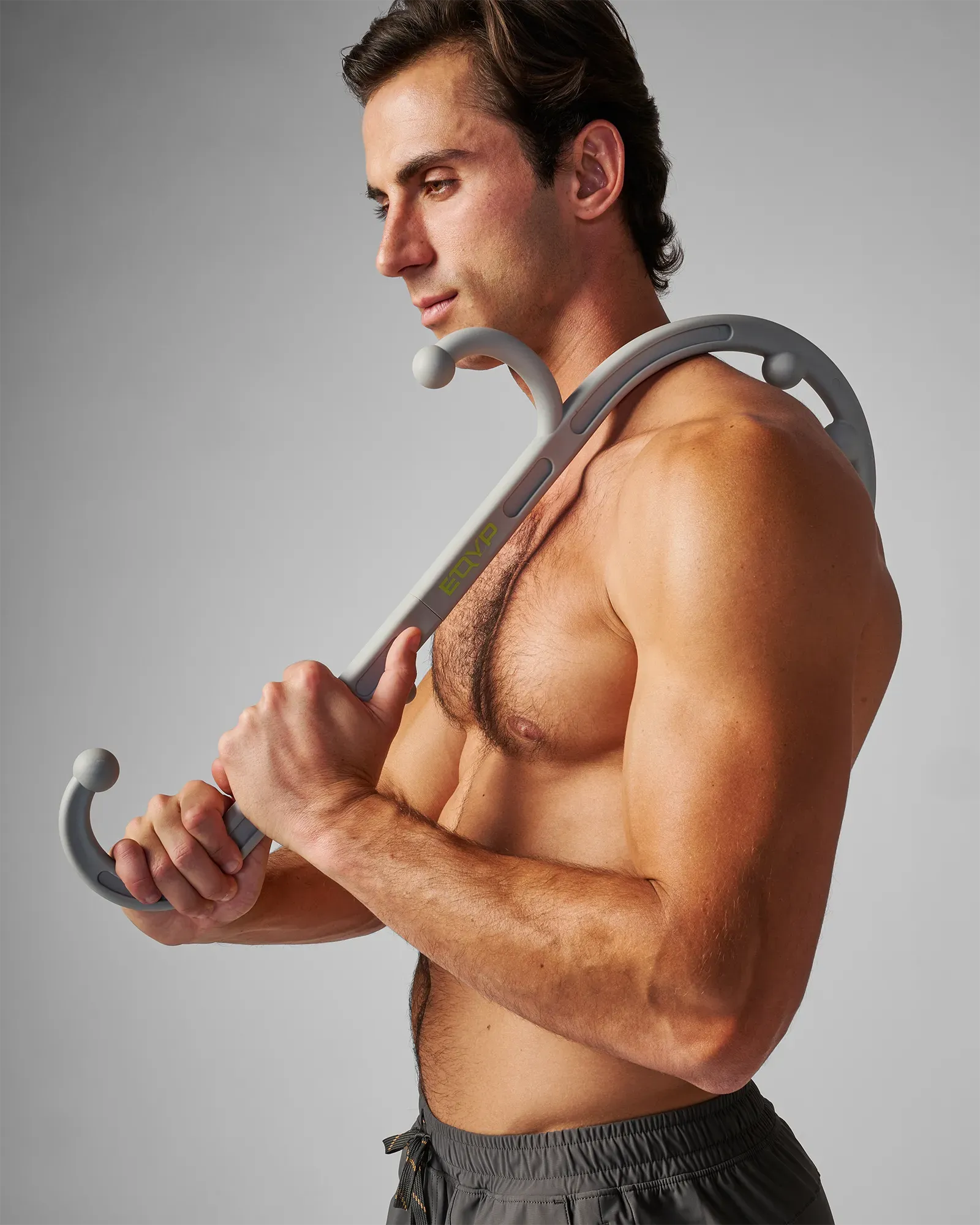
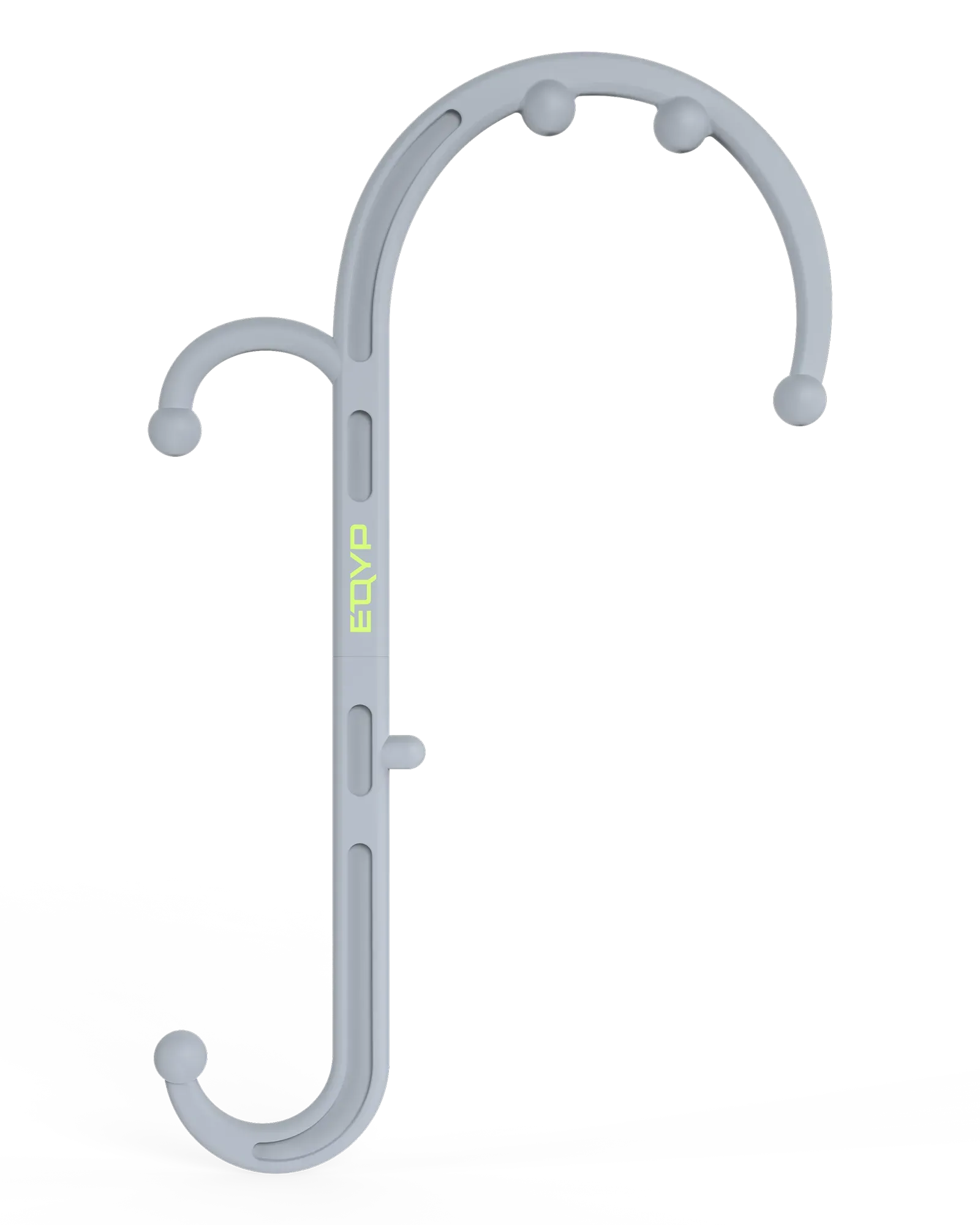
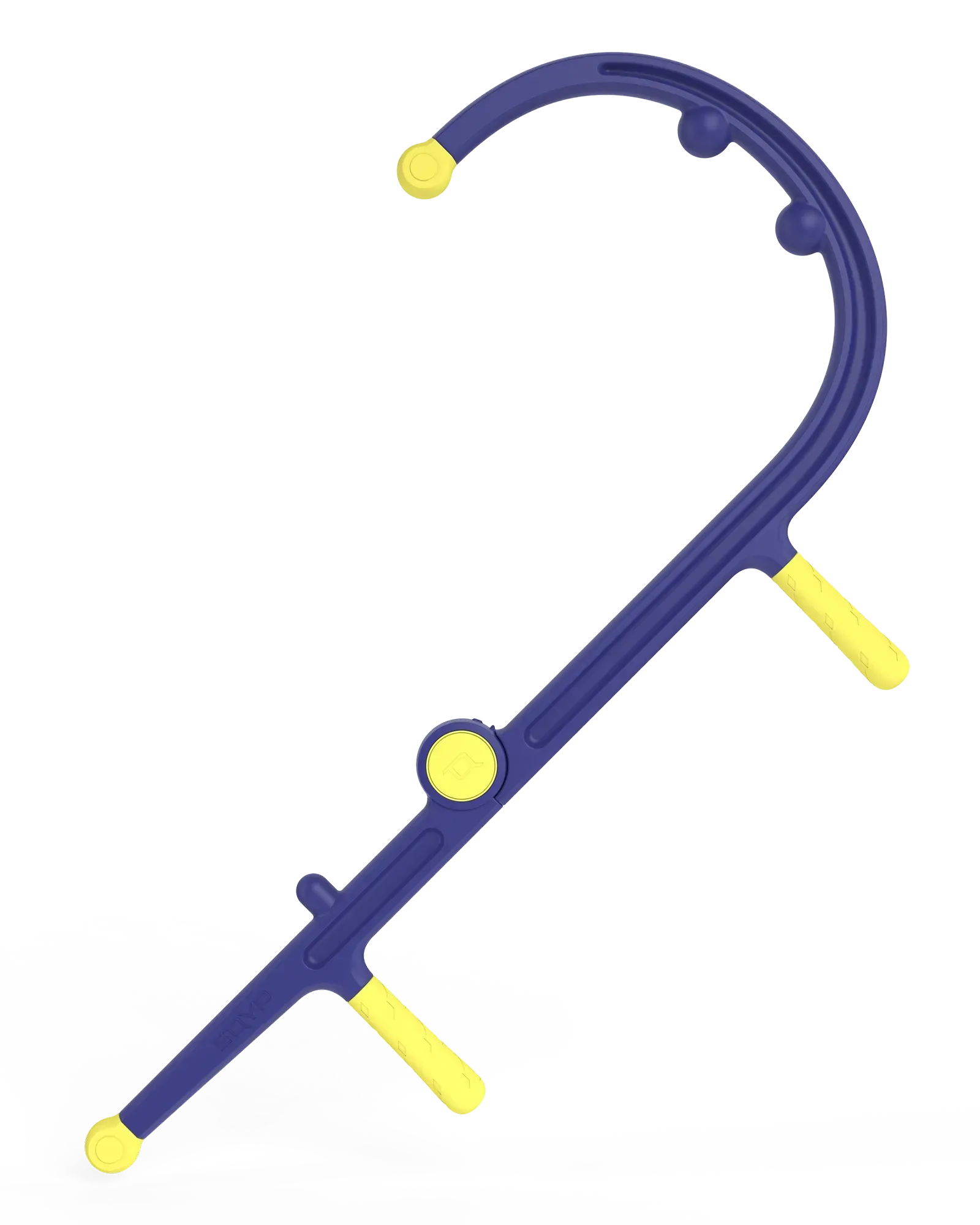
Muscle hooks are curved massage tools designed to reach trigger points in the shoulders, upper back, and glutes — areas that are difficult to access with your hands or standard foam rollers.
How do I use a muscle hook on my own back?
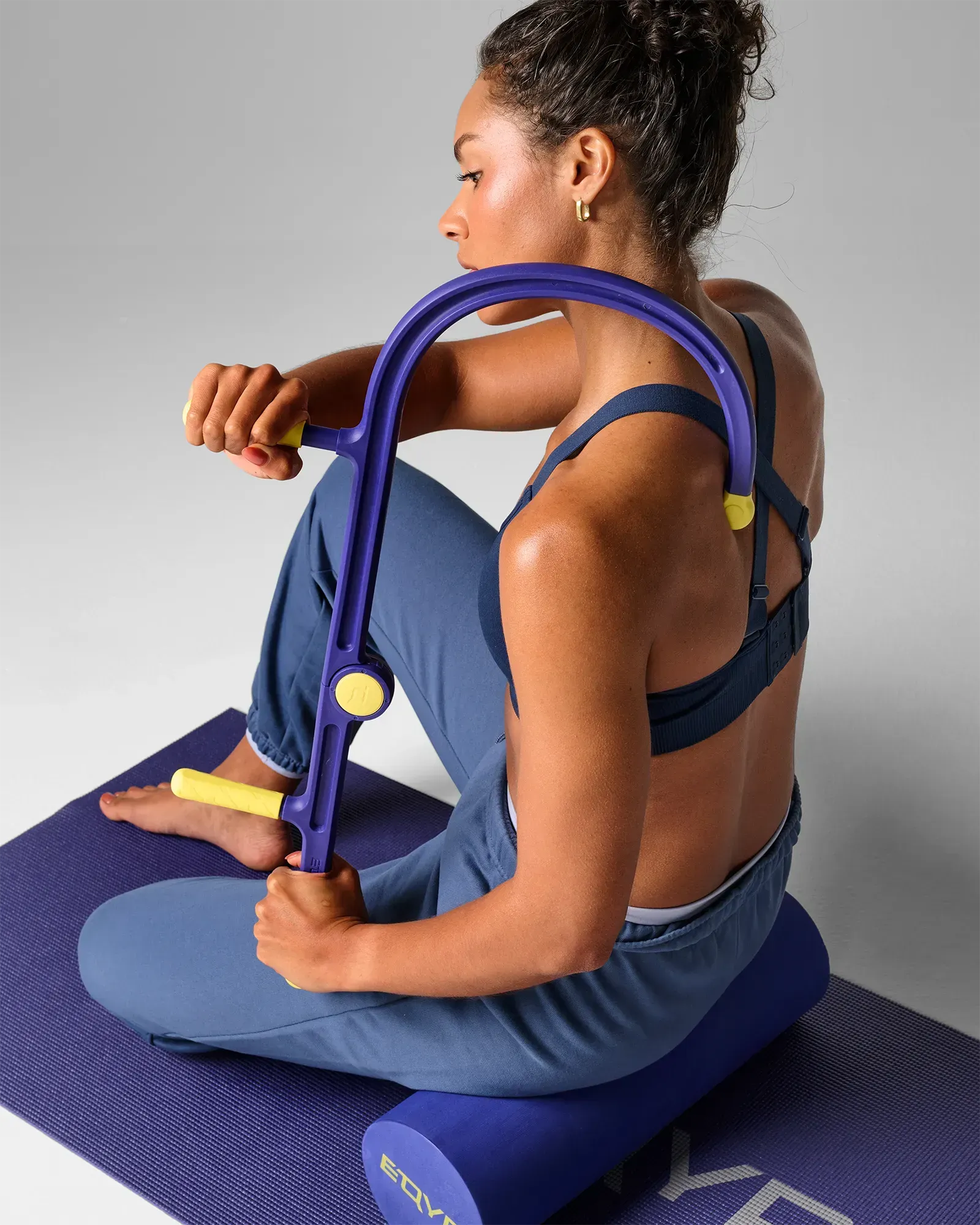
Position the curved hook over your shoulder or reach it around to your upper back, then apply steady pressure to the sore spot for 30-60 seconds, adjusting angle as needed.
What's the difference between a standard and multi-node muscle hook?
A standard muscle hook has a single primary pressure point, while a multi-node hook features several pressure nodes for targeting multiple trigger points in one pass, often in a foldable, travel-ready design.
Can muscle hooks replace a professional massage?
Muscle hooks can effectively address surface tension and trigger points between sessions, though a professional massage therapist can address deeper or more complex issues.
Are muscle hooks good for neck and shoulder tension?
Yes, muscle hooks are commonly used for neck, shoulder, and upper back tension since their curved design allows you to reach these areas without needing another person.
How much pressure should I apply with a muscle hook?
Start with light to moderate pressure and gradually increase as the muscle releases — sharp or worsening pain is a sign to ease off rather than push harder.